

Table of Contents
- Why Coffee Filter Alternatives Matter for Flavor
- Metal Coffee Filter vs Paper: What Changes in Your Cup
- Cloth Coffee Filter: A Reusable Middle Ground
- Coffee Filter Substitutes in an Emergency
- Flavor Profile Comparison: Which Filter Suits Your Brew
- Cost and Environmental Considerations Over Time
- Common Mistakes When Switching Filter Types
- Frequently Asked Questions
Last Updated: October 11, 2026
Why Coffee Filter Alternatives Matter for Flavor
The filter you choose changes what ends up in your cup. Paper filters trap oils and fine sediment, creating a clean, bright brew. Metal and cloth filters let more oils through, producing a fuller body and richer mouthfeel. If you've been using the same filter type for years, switching alternatives can reveal flavors you've been missing.
When you're investing in roast-to-order coffee with peak freshness, the brewing method matters just as much as the beans themselves. The right filter unlocks the full potential of single-origin flavors.
Different coffee filter alternatives deliver noticeably different results. Some preserve delicate notes. Others amplify body and sweetness. Understanding these trade-offs helps you match your filter to your brewing style and flavor preferences.
Metal Coffee Filter vs Paper: What Changes in Your Cup
A metal coffee filter allows more oils and fine particles to pass through than paper, creating a heavier mouthfeel and bolder flavor profile. This is the core difference that shapes everything else about how your coffee tastes. But understanding how much difference it makes requires comparing them side-by-side under controlled conditions.
How metal filters affect coffee oils and body
Metal filters, typically stainless steel mesh, don't absorb anything. The coffee oils that paper traps pass straight into your cup.
The trade-off is clarity. Metal filters let fine sediment through, giving your coffee a slightly grainy texture at the bottom of the cup. Some people love this tactile quality. Others find it off-putting or associate it with under-extraction.
To taste the difference yourself: Brew the same coffee, same beans, same grind size, same water temperature, same brew time, in both a metal filter and a paper filter on the same day. Pour both into white cups.
Metal filters work best with:
- French press brewing
- Pour-over cones designed for metal filters (such as Melitta-style or Chemex-compatible metal inserts)
- Turkish coffee pots
- Moka pots
- AeroPress with metal filter cap
They're durable and reusable, cutting down on waste. You'll rinse and dry one metal filter hundreds of times before it needs replacing.
Stainless steel mesh gauge and sediment clarity
Stainless steel mesh comes in different gauges, measured in microns. Finer mesh (100-150 microns) traps more sediment and behaves more like paper. Coarser mesh (200+ microns) lets more particles through and amplifies the full-bodied effect.
A medium-gauge stainless steel filter (around 150-200 microns) offers a practical middle ground: more oils than paper, less sediment than a coarse mesh. This balance appeals to people who want body without the gritty mouthfeel.
Paper filters produce the clearest cup because they trap oils and all particles down to about 20 microns. If clarity is your priority, if you want to taste the delicate floral or fruity notes in a light roast without any haze or texture, paper does that job better than any metal alternative.
Compatibility and fit with common brewers
Not all metal filters fit all brewers. A metal filter designed for a Chemex will not fit a Melitta dripper, and a fine-mesh strainer is too shallow for most pour-over cones. Before switching to metal, confirm that your brewer has a metal-filter option or that aftermarket metal filters are available for your specific model. Many drip coffee makers are not designed for metal filters, the mesh can clog or allow grounds to escape into the carafe.
Cloth Coffee Filter: A Reusable Middle Ground
Cloth filters made from cotton or linen sit between paper and metal in terms of what they let through. They trap some oils and sediment but not all.
How cotton and linen cloth filters brew
Cloth filters are woven tight enough to catch fine particles but loose enough to let oils pass. The result is a balanced cup with good body and reasonable clarity.
Cotton and linen behave similarly. Both require proper care to prevent flavor transfer from old coffee residue.
Cloth filters work in:
- Pour-over drippers designed for cloth
- Some French press models with cloth inserts
- Traditional brewing methods in coffee-producing regions
They're reusable if maintained well. One cloth filter replaces hundreds of paper filters, making them an environmentally conscious choice.
Cleaning and maintenance for consistent flavor
Cloth filters must be rinsed thoroughly after each use. Dried coffee oils build up and create stale, off-flavors in future brews.
Store cloth filters in the refrigerator between uses. Keep them wet. Dry storage allows oils to oxidize, which ruins the filter's flavor neutrality.
Every few weeks, soak your cloth filter in hot water with a small amount of baking soda to remove stubborn residue. This keeps the weave open and the filter performing well.
Coffee Filter Substitutes in an Emergency
If you're out of filters, several household items work in a pinch. But not all substitutes are equal, some are genuinely safe and functional, while others risk damaging your brewer or introducing unwanted flavors. Understanding why each works or fails helps you choose wisely.
What works and why
Clean cotton cloth or kitchen towel: A clean, tightly woven cotton cloth folded into a cone works in a pour-over dripper because cotton fibers are fine enough to trap most grounds and sediment while allowing water to flow through.
Cheesecloth (multiple layers): Cheesecloth is looser than cotton, so fold it 4-6 times to create enough density to trap grounds. A single layer will let too much sediment through. When layered properly, it functions similarly to a cloth filter.
Fine-mesh strainer or tea infuser: A fine-mesh strainer (100+ microns) catches most grounds but lets fine sediment through, giving you a slightly gritty cup. This works best for immersion brewing (like a makeshift French press) where you can pour slowly and leave sediment behind.
What doesn't work and why
Paper towels: Paper towels are too loose and shed fibers into your coffee. They also absorb water unevenly, causing channeling (water flowing through gaps rather than evenly through the grounds), which under-extracts the coffee and produces a weak, sour cup.
Napkins: Same problem as paper towels, too loose, too much fiber shedding, uneven water flow.
Coffee filters from other brewers: If you use a Melitta dripper but only have Chemex filters on hand, the fit won't work.
Unbleached or unrinsed cloth: If you use a new cloth that hasn't been washed, it may have sizing (a starch-like coating used in manufacturing) or lint that will flavor your coffee. Always rinse new cloth filters thoroughly in hot water before first use.
Safety considerations with substitutes
Some household items should be avoided entirely:
Plastic mesh or synthetic cloth: Plastic can leach chemicals when exposed to hot water, especially if it's not food-grade. Stick to natural fibers (cotton, linen) or stainless steel.
Aluminum foil or metal objects: Never use aluminum foil as a filter, it can tear, release particles into your coffee, and potentially react with acidic coffee. If you use a metal strainer, ensure it's food-grade stainless steel, not aluminum or coated steel that may flake.
Newspaper, cardboard, or untreated paper: These contain inks and chemicals not designed for food contact. Avoid them entirely.
Cloth with strong odors or dyes: A cloth that smells like detergent or has been dyed will transfer those flavors to your coffee. Use only plain, neutral-smelling cloth.
When to use a substitute versus when to buy filters
If you brew coffee once or twice a week, keep a backup cloth filter or metal filter on hand; the upfront cost is low, and you'll never need a substitute. If you brew daily and run out of paper filters, a cloth towel works fine for one or two days while you order more. But if you're out of filters more than once a month, you're underestimating your consumption, buy in bulk or switch to a reusable filter to avoid the hassle and the risk of a poor cup.
Flavor Profile Comparison: Which Filter Suits Your Brew
| Filter Type | Body | Clarity | Oils | Sediment | Best For |
|---|---|---|---|---|---|
| Paper | Light | Excellent | Minimal | None | Delicate, bright flavors |
| Metal mesh | Full | Low | Maximum | Noticeable | Bold, rich profiles |
| Cloth | Medium | Good | Moderate | Minimal | Balanced, clean cups |
Paper filters shine with light roasts and single-origins where you want to taste subtle floral or fruity notes. The clean cup lets those delicate flavors come through without the heaviness of oils.
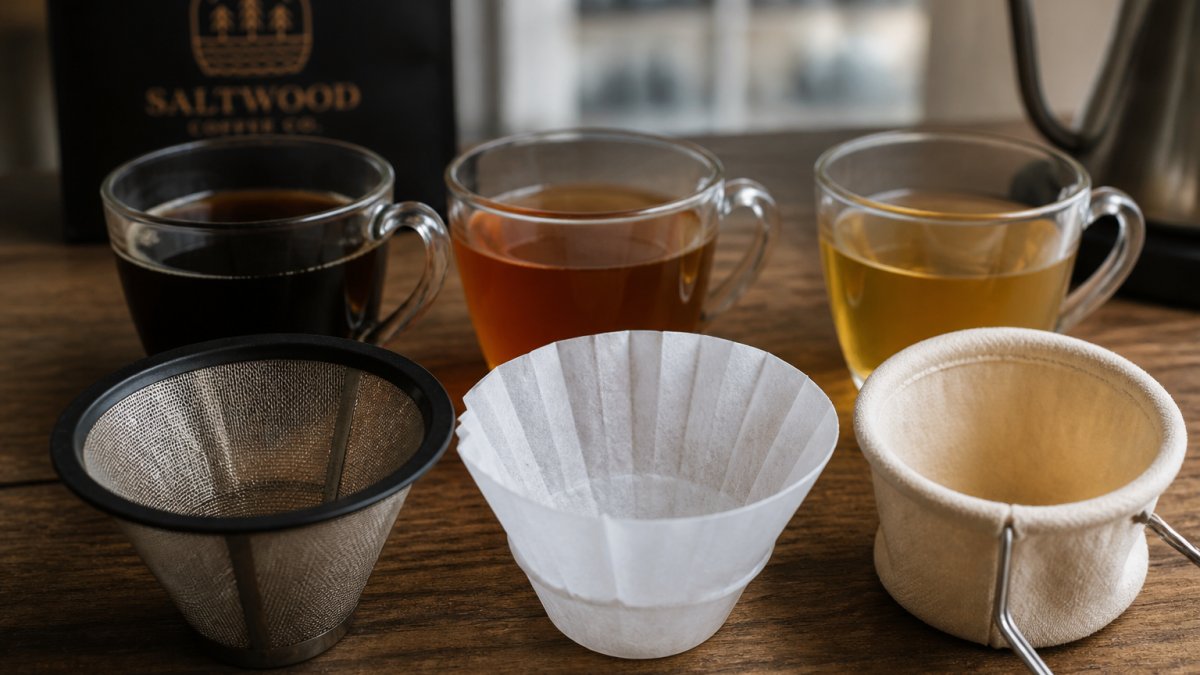
Metal filters suit darker roasts and blends where body and sweetness are the priority. The oils amplify those qualities. If you're brewing a chocolate-forward blend, metal lets you taste the full depth.
Cloth filters work well for medium roasts and coffees with balanced flavor profiles. They preserve enough oils for body without obscuring the origin's character.
Cost and Environmental Considerations Over Time
Paper filters cost pennies per use. They go straight to compost.
Metal and cloth filters have an upfront cost. Both pay for themselves if you brew regularly.
The environmental impact favors reusables. Paper filters require trees, bleaching, and packaging. Metal and cloth filters eliminate that waste stream once purchased. If you care about reducing your coffee ritual's footprint, switching to a reusable filter is one of the highest-impact changes you can make.
Common Mistakes When Switching Filter Types
The biggest mistake is not adjusting your grind size when switching filters. Paper requires a medium grind. Metal filters work better with a slightly coarser grind because the water flows faster through the larger gaps. Cloth filters fall in between.
Another common error is assuming all metal filters perform the same. Gauge matters. A very coarse mesh produces a noticeably different cup than a fine mesh. If your first metal filter disappointed you, try a different gauge before giving up on the filter type.
People also forget to rinse reusable filters properly. A cloth filter that smells like old coffee will flavor your next brew. Metal filters with dried oils create rancid notes. Both need immediate rinsing and proper storage to stay neutral.
Frequently Asked Questions
What to use if I don't have coffee filters?
Kitchen towels, cheesecloth, and fine mesh strainers work in emergencies, though they compromise clarity and may leave sediment. For better results, fold a clean cloth or use a fine-mesh strainer lined with paper towel. These substitutes work best for drip or pour-over brewing when you're without your usual coffee filter alternatives.
Do metal coffee filters make coffee taste better?
Metal filters produce a fuller-bodied, richer cup by allowing coffee oils to pass through, creating more texture and depth. Paper filters create a cleaner, lighter cup. Whether metal tastes 'better' depends on your preference, metal suits those who enjoy bold, oily coffee; paper suits those who prefer clarity and brightness. Both are valid brewing choices.
Can I use a clean cloth as a coffee filter?
Yes. Cloth coffee filters, typically made from cotton or linen, produce a smooth cup between metal and paper, they retain some oils while filtering sediment. Rinse cloth filters thoroughly after each use and store them damp in the refrigerator to prevent mold. Proper cleaning is essential for consistent flavor and preventing off-tastes.
Are paper coffee filters the same as parchment paper?
No. Coffee filters are engineered to control extraction and clarity; parchment paper is food-safe but not designed for brewing and may impart unwanted flavors. Parchment is too thick and doesn't filter sediment effectively. Use actual coffee filters or cloth alternatives for best results, not kitchen parchment.
The filter you choose shapes your coffee experience more than most people realize. Paper delivers clarity and brightness. Metal brings body and richness. Cloth balances both. When you're brewing Saltwood Coffee's roast-to-order beans at their peak freshness, the right filter lets those flavors shine exactly as intended. Start the Ritual by experimenting with the filter that matches your flavor goals, you'll taste the difference immediately.