

Table of Contents
- Pour Over vs French Press for Beginners: The Short Answer
- What's the Difference Between Immersion and Drip Coffee?
- Flavor, Body, and Mouthfeel: What Actually Changes in the Cup
- The Best Coffee Grind Size for French Press (and Why Pour Over Needs a Different One)
- Pour Over Coffee Brewing Tips for Beginners
- French Press Step by Step: What Beginners Get Wrong
- Cost Per Cup, Cleanup, and Grinder Requirements
- Conclusion: Which Method Fits Your Morning?
- Frequently Asked Questions
Last Updated: October 2, 2026
Pour Over vs French Press for Beginners: The Short Answer
If you want the shortest possible answer to pour over vs french press for beginners: choose the French press if you value richness, forgiveness, and a five-minute routine. Choose pour over if you want clarity, control, and a cup that tastes cleaner. That is the whole debate in two sentences, and everything else is detail. At Saltwood Coffee, we roast to order and ship the same day, so the beans you brew are still inside their peak flavor window when they land on your counter. Below, we break down the actual differences beginners need to know: grind size, water temperature, cleanup, and cost per cup.
What's the Difference Between Immersion and Drip Coffee?
The difference between immersion and drip coffee comes down to contact. In immersion brewing, the coffee grounds sit fully submerged in water for the entire brew. In percolation, water passes through the grounds once and drains away.
French press is immersion. You add coarse grounds, pour hot water over them, wait four minutes, then press the filter down. The grounds never leave the water until you plunge.
Pour over is percolation. Water travels through a bed of coffee in a paper or metal filter and drips into your carafe. Contact time is shorter, and the water does the work through gravity.
That single mechanical difference explains almost everything else: body, sediment, forgiveness, and how much attention the brew demands from you.
Flavor, Body, and Mouthfeel: What Actually Changes in the Cup
The flavor difference between pour over and French press is not subjective preference, it is chemistry. Two variables do almost all the work: what the filter traps, and how long the water stays in contact with the grounds.
French press is full immersion with a metal mesh filter. The mesh has openings measured in hundreds of microns, so coffee oils, fine particles (called "fines"), and dissolved solids all stay in the cup. Those oils carry much of the aromatic complexity and the tactile weight you feel on your tongue. The fines add a slight grit and a heavier texture. The result is a cup with high total dissolved solids (TDS) and a round, syrupy body.
Pour over is percolation through a paper filter. Paper fibers trap oils and most fines, so what reaches your mug is mostly dissolved solids and water, no fat, no grit. TDS is typically lower, and the cup reads as lighter, cleaner, and more transparent. Flavor notes separate instead of blending: you taste the acidity first, then sweetness, then the finish.
| What Changes | French Press | Pour Over |
|---|---|---|
| Filter type | Metal mesh | Paper (usually) |
| Oils retained | Yes | No |
| Fines in cup | Some | Almost none |
| Typical TDS | Higher | Lower |
| Body | Full, syrupy | Light, tea-like |
| Flavor separation | Blended | Distinct |
| Temperature stability | Drops slowly | Drops faster |
| Forgiveness | High | Lower |
Temperature matters more than most beginners realize. In a French press, the grounds sit in a preheated carafe and the water stays hot for the full four minutes, so extraction is even and complete. In a pour over, water leaves the bed as soon as it passes through, so the slurry cools faster. If your pour-over kettle is not preheated or your dripper is cold, the last third of the brew extracts at a lower temperature and the cup tastes flat or sour.
Here is the honest part most guides skip: the same bean tastes like two different coffees across these methods. A medium-roast Colombia with dried orange, berry, and chocolate notes will taste rounder and heavier in a French press, the oils carry the chocolate and the fines add weight, and brighter and more separated in a pour over, where the fruit acidity reads first and the chocolate becomes a finish rather than a foreground note. Neither is better. They are different extraction profiles from the same raw material.

The Best Coffee Grind Size for French Press (and Why Pour Over Needs a Different One)
The best coffee grind size for french press is coarse, roughly the texture of sea salt. Coarse particles resist clogging the metal mesh and keep sediment manageable. If you grind too fine, you get sludge and a bitter, muddy cup.
Pour over needs the opposite: medium-fine, closer to table salt. The bed must be even enough for water to pass through at a steady rate. Too coarse and the water rushes through, leaving a weak, sour cup.
This is where beginners lose the most ground. A $20 blade grinder produces uneven particles, which means both methods suffer. If you brew either style regularly, a burr grinder is the single upgrade that changes your results most.
Pour Over Coffee Brewing Tips for Beginners
Pour over coffee brewing tips for beginners start with three numbers: a 1:16 brew ratio, water at 92-96°C, and a total brew time of two to three minutes.
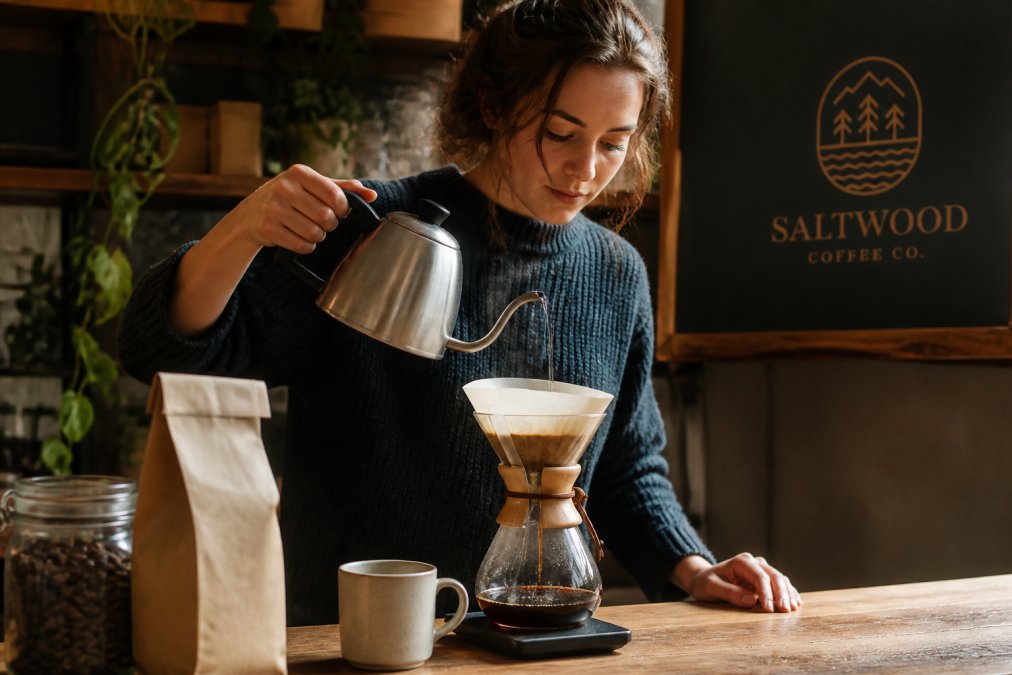
Here is the process, step by step:
- Rinse the paper filter with hot water, then discard the rinse water.
- Add medium-fine grounds, about 15 g for a 240 ml cup.
- Pour a small amount of water to saturate the grounds and let them bloom for 30 seconds.
- Pour in slow circles, keeping the water level steady.
- Let it drain fully, then serve.
French Press Step by Step: What Beginners Get Wrong
French press step by step is simple: coarse grounds, hot water, four minutes, plunge. The mistakes happen in the details.
Three things beginners get wrong:
- Grinding too fine, which creates sludge and an over-extracted, harsh cup
- Plunging too fast, which stirs up fines and clouds the brew
- Letting the coffee sit after pressing, which keeps the extraction going
Cost Per Cup, Cleanup, and Grinder Requirements
This is the section most pour over vs French press guides skip, and it is where beginners actually lose money and patience. Here is the honest math.
- French press: coarse, sea-salt texture. The mesh is forgiving of a slightly uneven grind because the grounds sit still. But too many fines will pass through the mesh and turn the cup muddy. A blade grinder produces exactly those fines.
- Pour over: medium-fine, table-salt texture. The bed must be even enough for water to pass through at a steady rate. Too coarse and the water channels and rushes through, leaving a weak, sour cup. Too fine and the bed clogs and stalls, leaving a bitter, over-extracted cup. A blade grinder cannot hit this window reliably.
Conclusion: Which Method Fits Your Morning?
The method matters less than the bean. A great French press brew from stale, mass-produced coffee will lose to a simple pour over made with fresh, well-roasted beans every single time. That is the variable most beginners overlook while they argue about gear.
Frequently Asked Questions
Which brewing method is easier for a beginner to master?
The French press is more forgiving for beginners. You add coarse grounds, pour hot water, wait four minutes, and press. Pour over rewards technique: a steady pour, a bloom, and consistent timing. If you want a low-fuss start, choose the French press. If you enjoy a small ritual and want to learn control, pour over gives you more to practice and more clarity in the cup once you get the pour and grind size right.
What are the main flavor differences between pour over and French press?
Pour over uses a paper filter that traps coffee oils and sediment, producing a clean cup with brighter acidity and clearer flavor notes. French press uses a metal mesh that lets oils and fine particles through, giving a full-bodied, richer cup with more mouthfeel and heavier texture. Medium roasts like Saltwood Coffee's Colombia or Guatemala show their dried orange, berry, and chocolate notes differently in each method: pour over highlights brightness, French press highlights richness.
How does the grind size differ for these two methods?
French press needs a coarse grind, roughly the texture of sea salt, because fine particles slip past the metal mesh and create sludge. Pour over needs a medium-fine grind, closer to table salt, so water flows through the bed at a steady rate. If your French press cup tastes muddy, grind coarser. If your pour over drains too fast and tastes weak, grind finer. A burr grinder makes this adjustment far easier than a blade grinder.
Do I need special equipment for pour over vs. French press?
A French press needs the press itself, a kettle, and coarse ground coffee. Pour over needs a dripper, paper filters, a kettle (a gooseneck helps with control), and a mug or carafe. Neither method requires electricity beyond heating water. Both benefit from a burr grinder and a scale, but beginners can start with pre-ground coffee and add gear later. Budget for the grinder before the brewer if you can only buy one upgrade.
Is pour over better for you than French press?
Paper filters in pour over trap more coffee oils and sediment, which some people prefer for a lighter, cleaner cup. French press keeps those oils in the brew, adding body and richness. Neither method is inherently healthier; the difference is what ends up in your mug. If you like a clean cup with clarity, pour over suits you. If you want a full-bodied, oil-rich cup, the French press delivers that.