

Table of Contents
- Why Resting Coffee Beans After Roasting Changes Everything
- How Long to Rest Coffee Beans After Roasting: Timing by Roast and Brew Method
- When to Brew Freshly Roasted Coffee: Signs It Is Ready
- How to Tell If Coffee Is Fresh: A Repeatable Taste-Testing Method
- How to Store Freshly Roasted Coffee Beans While They Rest
- Resting Versus Storage: Shelf Life, Whole Beans, and Ground Coffee
- Conclusion: Start the Ritual with Patience
- Frequently Asked Questions
Last Updated: October 14, 2026
Why Resting Coffee Beans After Roasting Changes Everything
Freshly roasted coffee needs to rest because of a process called degassing. Right after roasting, beans hold large amounts of carbon dioxide trapped inside. Brew too soon and that gas fights your water, which throws off extraction and leaves you with a flat, uneven cup. This is why wait after roasting coffee beans matters more than most people realize, and why wait after roasting coffee beans is the question every new roaster asks.
At Saltwood Coffee, we roast every order the day it ships. That means our beans often arrive at your door just days off the roast, right in the middle of their resting window. Knowing how to handle that window is the difference between a good cup and a great one.
Here is the part most guides skip: resting is not about the beans going stale. It is about the beans settling. Two very different things.
The Science of Degassing and CO2 Release
Degassing is the release of carbon dioxide from roasted coffee beans over time. During roasting, beans build up CO2 pressure inside their cell structure. After the roast ends, that gas slowly escapes through tiny pores.
The Specialty Coffee Association's guidance on roast freshness notes that most CO2 leaves the bean within the first several days. The rate slows after that.
Why does this matter for your brew? Gas and water do not mix well. When hot water hits a gassy bean, the CO2 pushes back. You get an uneven soak, and part of your coffee never extracts properly.
How Resting Affects Flavor, Aroma, and Extraction
A rested bean brews cleaner. The flavors settle into balance. The aroma sharpens instead of smelling sharp and green.
Brew a bean one day off roast and you may taste:
- Harsh acidity that bites
- A thin, hollow body
- Sour notes that never round out
Wait a week and those same beans often taste sweeter and fuller. The difference is not the bean. It is the timing.
How Long to Rest Coffee Beans After Roasting: Timing by Roast and Brew Method
There is no single answer, but there is a reliable range. Most beans hit their best flavor somewhere between four days and two weeks after roasting. The exact number depends on roast level, bean density, and how you brew. The chart below is the shortcut most guides leave out, but treat it as a starting point, not a rule. Your grinder, water, and palate will shift the window by a day or two in either direction.
Why Roast Level Changes the Clock
Darker roasts degas faster. The roasting process cracks the bean's cell structure open, creating more pathways for CO2 to escape. Light roasts are denser and hold onto gas longer because their cellular walls remain more intact.
- Dark roast: ready in 3-5 days
- Medium roast: ready in 5-10 days
- Light roast: ready in 7-14 days
Bean density matters too. High-grown, dense beans tend to rest longer than softer, lower-grown beans at the same roast level.
Why Brew Method Changes the Clock
Espresso is the pickiest. The pressure and short contact time mean gas has nowhere to hide. A gassy bean pulls a sour, sputtering shot with weak crema. Pour-over and immersion brewing are more forgiving because the longer contact time lets gas escape during the brew itself.
| Brew Method | Best Rest Time | Why |
|---|---|---|
| Espresso | 7-14 days | Needs full degassing for stable crema and even flow |
| Pour-over | 4-10 days | Bloom handles early gas release; paper filter catches fines |
| Immersion (French press, AeroPress) | 3-7 days | Long contact time is forgiving of residual CO2 |
| Cold brew | 3-5 days | Slow, cold extraction tolerates fresher beans |
| Moka pot | 5-10 days | Pressure and short contact sit between espresso and pour-over |
How to Tell Degassing Is Affecting Extraction
You do not need a lab to spot degassing problems. Watch for these observable signs:
- Excessive bubbling during the bloom. A pour-over that puffs up like a volcano and collapses fast is still gassy.
- Uneven flow in espresso. Channeling, sputtering, or a shot that starts fast then stalls often points to CO2 interfering with puck saturation.
- Inconsistent extraction across identical brews. If the same dose and grind give you wildly different cups two days apart, gas is likely the variable.
These are clues, not definitive freshness tests. A dull grinder burr or a bad water ratio can mimic the same symptoms. Change one variable at a time before blaming the beans.
When to Brew Freshly Roasted Coffee: Signs It Is Ready
You can stop guessing. The bean tells you when it is ready if you know what to look for.
Signs your coffee is still too fresh:
- The bloom puffs up like a volcano and collapses fast
- Espresso pours thin with almost no crema
- The cup tastes sour or sharp, not sweet
Signs your coffee has rested enough:
- The bloom rises gently and evenly
- Crema holds together for several seconds
- Flavors taste balanced, with sweetness coming through
How to Tell If Coffee Is Fresh: A Repeatable Taste-Testing Method
You can test any bag in ten minutes. This method works for whole beans and ground coffee alike.
- Brew two small cups using the same dose and water temp.
- Taste cup one at room temperature so heat does not hide flaws.
- Note the first impression: sour, flat, or balanced.
- Wait two minutes and taste again. Flavors shift as the cup cools.
- Score each cup from 1 to 5 on sweetness, body, and finish.
- Repeat every few days until your score peaks.
- Mark that day as your bean's peak window.
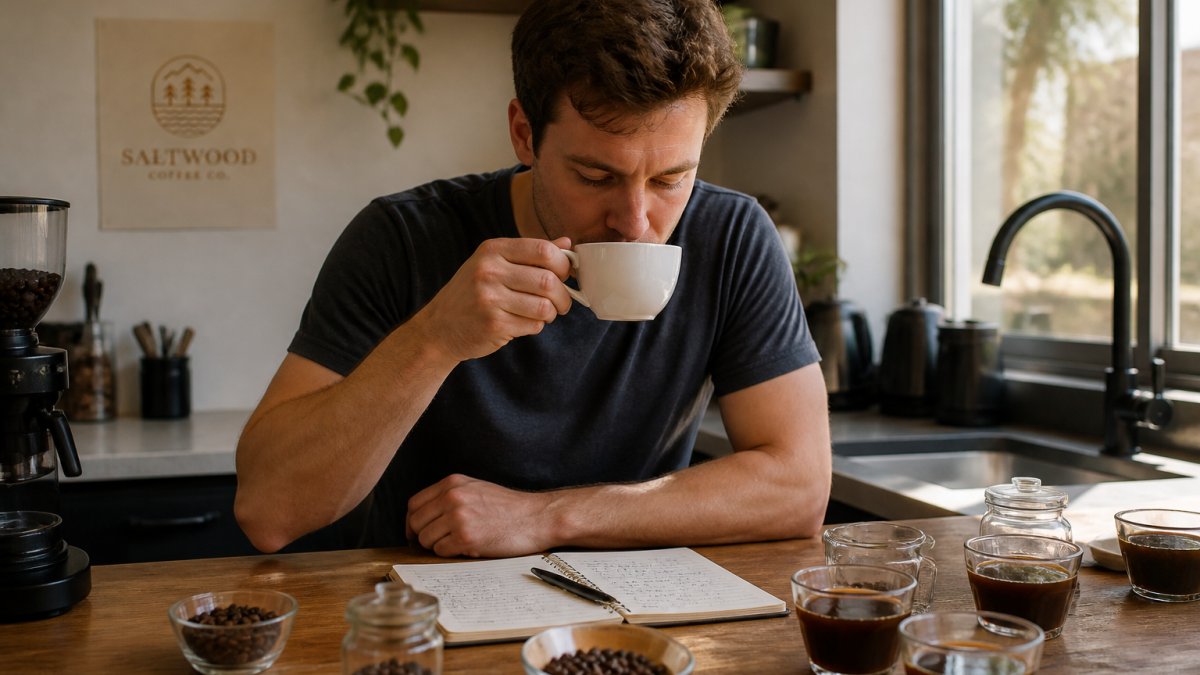
Tasting for Degassing and Extraction Problems
Sour and salty usually means under-extraction, often from too much gas. Bitter and dry points to over-extraction. If the cup tastes hollow no matter what you change, the beans likely need more rest.
The Coffee Quality Institute's cupping standards describe how trained tasters separate these flaws. You do not need a certificate. You just need a notebook and a few days of patience.
How to Store Freshly Roasted Coffee Beans While They Rest
Resting and storage are not the same job, and conflating them is where most advice goes wrong. Resting is a short window, days to a couple of weeks, when you want CO2 to escape. Storage is the long game of keeping oxygen, moisture, heat, and light away from beans once they have settled. The tactics differ.
During the Resting Window (Days 0-14)
You want gas out and oxygen mostly out. A one-way valve bag is the right tool here. The valve lets CO2 escape without letting oxygen in. Keep the bag sealed at room temperature, away from the stove and windowsill. Do not refrigerate or freeze beans you are actively resting, temperature swings and condensation will do more damage than the CO2 you are trying to release.
A few habits that protect flavor during this window:
- Buy whole beans and grind right before brewing
- Keep the bag folded and clipped between uses
- Store away from heat sources and direct light
After the Resting Window (Weeks 2+)
Once beans have settled, the priority shifts from venting to sealing. Oxygen is now the main enemy. Airtight containers with minimal headspace slow staling. If you buy more coffee than you will drink in two to three weeks, freezing is a legitimate option, but only if you do it right.
Whole Beans vs. Pre-Ground Coffee
Grinding increases exposed surface area dramatically, which changes how quickly coffee loses freshness. Whole beans hold up for several weeks when stored right. Ground coffee stales within days because oxygen reaches far more of the coffee's surface. If you buy pre-ground, treat the resting window as shorter and the storage window as much shorter. Grind fresh whenever you can.
When Beans Become Stale
Staling is not a cliff, it is a slope. Aromatics fade first, then sweetness, then body. Once the peak window closes, the coffee is not ruined. It just flattens. If that happens, use those beans for cold brew or milk-based drinks where the loss is less obvious. The key is to separate the short rest from the long storage, and to adjust your tactics as the beans move from one phase to the other.
Resting Versus Storage: Shelf Life, Whole Beans, and Ground Coffee
Resting and storage are not the same job. Resting is a short window for flavor to settle. Storage is the long game of keeping that flavor from fading.
Whole beans hold up far longer than ground coffee. Grinding exposes more surface to oxygen, so ground coffee stales within days. Whole beans keep well for several weeks when stored right.
Once the peak window closes, the coffee is not ruined. It just flattens. Aromatics fade first, then sweetness. If that happens, use those beans for cold brew or milk-based drinks where the loss is less obvious.
Conclusion: Start the Ritual with Patience
The hardest part of great coffee is waiting. But that wait is where flavor lives. Give your beans a few days, taste as they settle, and you will taste the difference.
At Saltwood Coffee, we roast to order and ship the same day it's roasted, so your beans arrive right at the start of their resting window. Our Whiskey Barrel Aged and Brazil Santos both reward a little patience. Start the Ritual, and let the wait do its work.


Frequently Asked Questions
How soon after roasting can I use coffee beans?
You can brew coffee beans within 24 hours of roasting, but the cup will likely taste flat and gassy because carbon dioxide is still escaping. For pour-over or immersion, waiting 3 to 7 days after the roast date gives the beans time to degas and develop clearer flavor. Espresso needs longer, usually 7 to 14 days, because the pressure magnifies any remaining CO2 and throws off extraction.
Do espresso beans need to rest longer than filter coffee beans?
Yes. Espresso typically needs 7 to 14 days of rest, while filter methods like pour-over or French press are ready in 3 to 7 days. The reason is pressure: espresso forces water through a small puck at high pressure, so any trapped carbon dioxide creates uneven extraction and thin crema. Filter methods are more forgiving, so the resting window is shorter and the flavor stabilizes sooner.
How should I store coffee while it rests?
Keep whole beans in an airtight container at room temperature, away from light, heat, and moisture. Do not refrigerate or freeze during the rest period, because condensation and odors can ruin the flavor. Grind just before brewing to protect the aromatics.
What happens if you brew coffee too soon after roasting?
Brewing too soon traps carbon dioxide in the coffee bed, which repels water and causes uneven extraction. The result is often a sour, sharp, or hollow cup with muted sweetness. In espresso, you may see gushing shots, weak crema, and inconsistent timing. Waiting a few days lets the CO2 release, so water can reach the soluble compounds that carry flavor, body, and aroma.