

Table of Contents
- What Stale Coffee Actually Tastes and Smells Like
- Visual Signs of Stale Coffee Beans
- How Long Do Coffee Beans Stay Fresh?
- The Bloom Test: A 30-Second Freshness Check
- Coffee Roast Date vs Expiration Date: Which One Matters?
- The Best Way to Store Coffee Beans to Prevent Staleness
- Frequently Asked Questions
Last Updated: September 28, 2026
What Stale Coffee Actually Tastes and Smells Like
Stale coffee tastes flat, hollow, and dull. The bright acidity and complex notes you paid for fade into cardboard, paper, or a faintly rancid edge. If your morning cup has lost its spark, the beans are the likely culprit, and this guide from Saltwood Coffee shows you how to tell if coffee beans are stale before you brew another disappointing pot.

Fresh coffee gets its character from volatile compounds released during roasting. Those compounds start breaking down the moment beans meet oxygen.
- Early stage: muted aroma, less sweetness
- Middle stage: flat flavor, faint cardboard notes
- Late stage: rancid or bitter, sometimes a musty smell
Visual Signs of Stale Coffee Beans
Your eyes can spot stale beans before your tongue does. Fresh beans look alive. Stale beans look tired. Here is what to check.
Dull, Tarnished Surfaces and Faded Color
Fresh roasted beans have a slight sheen, especially darker roasts. That shine comes from oils pushed to the surface during roasting. When beans go stale, the surface turns dull and tarnished. The color fades toward a lifeless, matte brown.
When Oils Disappear or Turn Rancid
Oils on coffee beans do two things as they age. First, they dry up. Second, they oxidize. That second process is where "rancid" comes from. Rancid oils smell like old cooking oil or crayons, not coffee.
Here is a quick visual check:
- Look for a matte, dusty surface with no sheen
- Check for uneven, patchy oil spots
- Smell the bag before you brew
- Compare against a fresh bag if you have one
How Long Do Coffee Beans Stay Fresh?
Whole bean coffee stays fresh for about two to six weeks after the roast date when stored properly. After that window, flavor degrades fast, even if the beans are still safe to drink.
Here is a rough freshness timeline:
| Stage | Time After Roast | What You'll Notice |
|---|---|---|
| Peak | 3 days to 2 weeks | Full aroma, bright acidity |
| Good | 2 to 4 weeks | Slightly muted, still enjoyable |
| Fading | 4 to 6 weeks | Flat flavor, weak aroma |
| Stale | 6+ weeks | Cardboard notes, dull cup |
The Bloom Test: A 30-Second Freshness Check
The bloom test is the fastest way to check freshness. It takes 30 seconds and needs nothing but hot water and your beans.
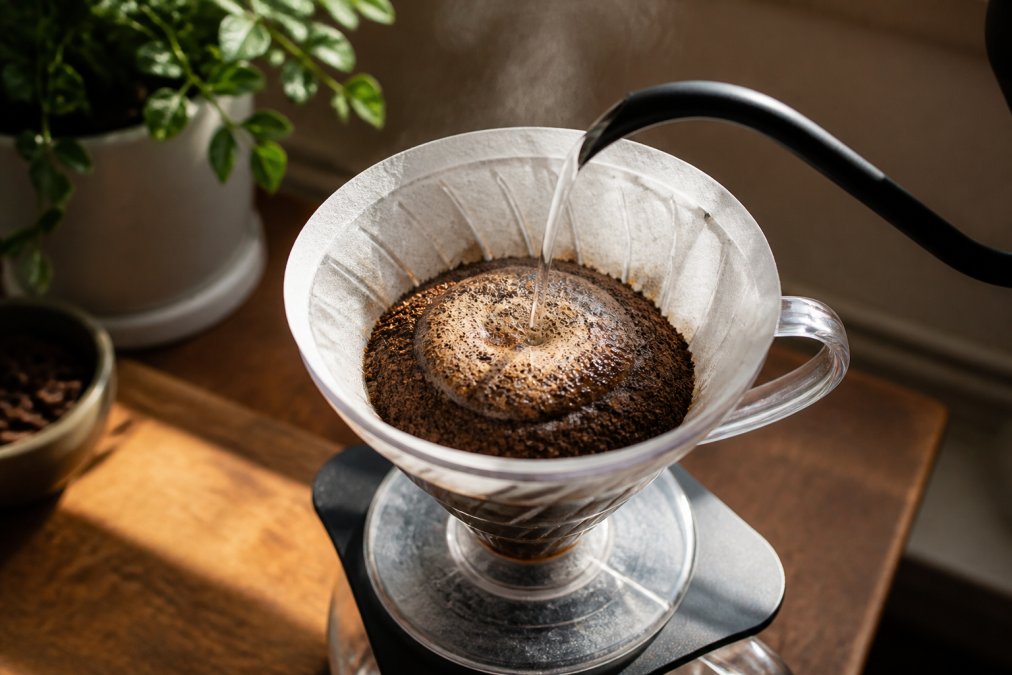
Try this:
- Grind a small scoop of beans fresh
- Put the grounds in a cup or pour-over cone
- Pour hot water over them and watch
- Note how much the bed expands and bubbles
Coffee Roast Date vs Expiration Date: Which One Matters?
The roast date matters far more than the expiration date. Expiration dates on coffee are often vague and set for safety, not flavor. A bag can be "safe" to drink months after it has lost everything that made it good.
What to look for:
- Roast date: printed as a specific day, ideal
- Best by date: vague, often a year out, less useful
- No date at all: a red flag for freshness claims
Why Some Bags Stay Fresh Longer: Packaging Technology
Two bags can carry the same roast date and age at completely different rates. The difference is packaging. This is the part most freshness guides skip.
Best Sellers Sample Pack: 6Bean →
Three packaging features do the heavy lifting:
- One-way degassing valve. Freshly roasted beans release carbon dioxide for days. A sealed bag with no valve would balloon and eventually split. The valve lets CO2 out while blocking oxygen from getting in. No valve means either a pinhole (oxygen in) or a hard-sealed bag that traps gas until you open it.
- Nitrogen flushing. Many commercial roasters displace oxygen inside the bag with nitrogen before sealing. Lower oxygen means slower oxidation, so the coffee holds up longer on a shelf. It does not stop staling, it slows it.
- Opaque, multi-layer film. Light and moisture accelerate degradation. Foil-lined or metallized bags block both. Clear windows and thin single-layer bags let both through.
What the Date Labels Actually Tell You
Roast date is the only label tied to flavor. Best-by dates are usually set by the roaster's own shelf-life testing or by retailer requirements, and they vary wildly, some are 6 months out, some 12, some 18. A long best-by window often signals a roaster optimizing for distribution, not peak flavor.
The Best Way to Store Coffee Beans to Prevent Staleness
The best way to store coffee beans is in an airtight, opaque container kept cool, dark, and away from moisture. Oxygen, light, heat, and moisture are the four enemies of fresh coffee. Block all four and you slow oxidation down.
Store beans like this:
- Use an airtight container with a one-way valve
- Keep it in a dark cabinet, not a clear jar
- Avoid the warm spot above the fridge
- Keep beans whole until you brew
- Buy only what you'll drink in a few weeks
The Freezer: A Definitive Guide (Not a Hedge)
Most guides either warn you off the freezer or wave at it vaguely. The evidence points one way: freezing, done correctly, is the single most effective way to slow staleness for coffee you will not drink within a few weeks. The catch is that "done correctly" is narrow, and most freezer mistakes are moisture mistakes.
Here is the protocol that works:
- Freeze at peak, not after decline. Put beans in the freezer within the first week or two of roast, while they still have most of their aromatics. Freezing stale beans just preserves stale beans.
- Portion before freezing. Divide into single-use or weekly portions. Every time you open the container, warm air hits cold beans and condenses. Portioning means you open once, not daily.
- Use an airtight, low-oxygen container. A vacuum-sealed bag, a mason jar filled to the brim, or a thick freezer bag with the air pressed out. Headspace is the enemy.
- Keep it cold and stable. A dedicated freezer spot away from the door. Temperature swings drive condensation. A deep freezer is better than a fridge freezer for long holds.
- Thaw sealed, then grind. Take the portion out, let it come to room temperature still sealed, then open and grind. Opening cold beans invites condensation on the surface.
- Never refreeze. Once thawed, the beans are on the normal clock. Refreezing adds moisture and accelerates decline.
What freezing does and does not do:
- Slows oxidation: yes, dramatically. Cold slows the chemical reactions that flatten flavor.
- Slows degassing: yes. Beans hold their CO2 longer, which is why a frozen-then-thawed bean can still bloom.
- Stops staling: no. It pauses the clock; it does not reset it.
- Fixes already-stale beans: no. Freezing cannot restore lost aromatics.
Pantry vs. Freezer: How to Choose
Use the pantry when you will finish the bag within two to four weeks. An airtight, opaque container in a cool cabinet is simpler and avoids any thawing hassle.
Frequently Asked Questions
Are 3-year-old coffee beans still safe to drink?
They are likely safe but will taste flat and lifeless. Coffee beans do not become unsafe to drink over time unless they have absorbed moisture and grown mold, which you would see as visible fuzz or smell as damp and musty. After three years, even properly stored beans have lost most of their volatile compounds and aromatics. The cup will taste hollow, cardboard-like, and bitter. If the beans look and smell fine, you can brew them, but expect a dull cup quality with none of the complex notes you would get from fresh coffee.
How long does it take for coffee beans to stale?
Whole bean coffee starts losing peak flavor within two to four weeks of the roast date. Ground coffee goes stale much faster, often within days, because more surface area is exposed to oxygen. The degassing process releases CO2 for the first week or two, which actually helps push oxygen away from the beans. Once that CO2 release slows, oxidation takes over. For the best cup quality, use whole beans within one to six weeks of roasting and store them in an airtight container away from light, heat, and moisture.
Does the smell of coffee beans indicate freshness?
Yes, smell is one of the most reliable indicators. Fresh coffee beans have a strong, complex aroma with distinct notes that match their sensory profile. Stale beans smell weak, flat, or like cardboard and paper. If you crush a bean between your fingers and it releases a rich scent, it is likely still fresh. If the aroma is faint or smells like dry hay, the beans have lost their volatile compounds and will produce a lifeless cup. Trust your nose before you brew.
Can you drink stale coffee beans?
Stale coffee beans will not make you sick, but the flavor degrades significantly. Oxidation turns the oils rancid, which can leave a bitter, cardboard-like taste in your cup. If the beans show no signs of mold or moisture damage, they are safe to consume. However, if you notice a musty smell, visible mold, or clumping from dampness, discard them. For better results with older beans, try a darker roast or use them in cold brew, where the extraction method can mask some of the flatness.
Stale coffee is a slow problem, and it is easy to miss until the cup tastes wrong. The fix is simple: buy fresh, store smart, and check the bloom before you brew. Saltwood Coffee roasts to order, ships the same day it's roasted, and keeps no standing inventory, so your beans arrive near their peak instead of months past it. Start the Ritual and taste what fresh coffee is supposed to be.