

Table of Contents
- What Makes Coffee Suited to a Slow Morning
- Best Medium-Roast Coffee Beans for Slow Mornings
- Coffee Beans for Drip Coffee Makers and Pour-Overs
- Best Coffee Beans for Morning Coffee: By Flavor and Intensity
- Fresh Roasted Coffee Beans: Freshness, Storage, and Peak Timing
- How to Brew Coffee for a Slow Morning Ritual
- Quick Comparison: Which Bean Matches Your Ritual
- Frequently Asked Questions
Last Updated: October 12, 2026
What Makes Coffee Suited to a Slow Morning
A slow morning ritual demands coffee that doesn't rush you. The best coffee beans for slow mornings are those that reward patience and invite contemplation, beans with balanced, approachable flavor profiles that taste better the longer you sit with them.
What separates slow-morning coffee from grab-and-go coffee is intentionality. Single-origin beans from regions like Brazil, Costa Rica, and Peru have enough depth to keep you interested, but enough balance to avoid overwhelming your palate before your second sip.
The freshness window matters more for slow mornings than for rushed ones. Whole beans that are roasted to order and ground moments before brewing reveal their full character.
Best Medium-Roast Coffee Beans for Slow Mornings
Medium roasts are the default for slow mornings. They're neither too light (which can taste sour or grassy) nor too dark (which can taste ashy or bitter). A medium roast brings out the natural sweetness and complexity of the bean while keeping the cup smooth and approachable.
Brazil Santos: Smooth, Cocoa-Forward Start
Brazil Santos delivers elegance in the cup with cocoa notes that feel almost dessert-like without being cloying. This single-origin bean from Fazenda Santa Barbara in São Paulo and Paraná comes from volcanic loam soil at altitudes of 750-1050 meters, which contributes to its smooth body and balanced sweetness.
The tasting profile leans toward dark chocolate and subtle caramel. It's not a bean that demands attention, it invites you to sit longer. The flavor unfolds as the cup cools, revealing notes that weren't obvious in the first sip.
Specialty Coffee Association research on Brazilian coffee origins
Best for: Anyone new to specialty coffee who wants something smooth and approachable.
Costa Rica: Bright, Balanced Sweetness
Costa Rican beans from Alajuela bring brightness without sharpness. The tasting profile includes sweet apple, raisin, and honey, flavors that suggest sweetness but don't taste artificially sweet. Grown at high altitudes (1300-1445 meters) on volcanic loam, these beans from micro farms use eco-pulped processing, which preserves the natural fruit character.

What makes Costa Rica special for slow mornings is its balance. It's not too heavy, not too light. The acidity is present but gentle. You can drink this coffee black, with milk, or however you prefer, and it holds up beautifully.
Best for: Those who enjoy fruit-forward coffee without overwhelming intensity.
Peru: Silky Caramel and Citrus Notes
Peru from the Piura and Amazonas regions offers a different kind of slowness, one built on silky body and layered sweetness. The tasting profile of salted caramel and citrus sounds complex, but it drinks smooth and balanced.
The citrus note is subtle, not a sharp lemon, but a hint of brightness that keeps the cup from feeling too heavy. The caramel sweetness is the main character.
Best for: Those who want sweetness with subtle complexity and a silky mouthfeel.
Sunrise Breakfast Blend: Approachable, Grounded
Not everyone wants a single-origin bean. The Sunrise Breakfast Blend is a lightly roasted blend of South American coffees designed specifically for early-morning ritual. The tasting notes include walnuts, mild apple, slight raisin, and toffee, a profile that's approachable and grounded without demanding expertise to enjoy.
A blend works well for slow mornings because the roaster has already done the work of balancing different origins and processing methods into one consistent cup. You don't have to think about what you're tasting; you just enjoy it.
Best for: Those who want simplicity and consistency without the complexity of single-origin beans.
Coffee Beans for Drip Coffee Makers and Pour-Overs
The brewing method shapes which beans shine. Drip coffee makers and pour-overs are common slow-morning approaches, and they favor different grind sizes and brew times.
Drip coffee makers work best with medium-ground coffee and beans that can handle a longer contact time with water.
For drip brewing, any of the Saltwood Coffee medium roasts work beautifully. The longer brewing time extracts sweetness and body without over-extracting bitterness.
The key difference: drip machines are forgiving. Pour-overs are precise. Choose beans that match your patience level.
Best Coffee Beans for Morning Coffee: By Flavor and Intensity
Smooth, Low-Intensity Options
If your slow morning is about ease rather than adventure, smooth and low-intensity is the path. Brazil Santos and the Sunrise Breakfast Blend both fit here. They don't challenge your palate early in the morning. They taste good at any temperature. They're the coffee equivalent of a comfortable sweater, familiar, reliable, and never jarring.

Low intensity doesn't mean low quality. It means the coffee doesn't demand anything from you except the time to drink it. The flavors are present but not aggressive. Acidity is gentle. Body is balanced. These beans are ideal if you're not a "coffee person" but want something noticeably better than grocery-store coffee.
Complex, Full-Bodied Choices
Peru and certain single-origins from Saltwood Coffee's catalog lean toward complexity and body. These beans reward attention. The flavors shift as the cup cools. The finish lingers. They're better when freshly ground and brewed carefully, because their character is worth tasting.
Full-bodied doesn't mean dark or bitter. It means the coffee has weight and texture on your palate. These beans work well for longer slow mornings when you're not rushing to the next thing. They're conversation starters if you're sharing your morning with someone else.
Fruity, Bright Alternatives
Ethiopia Natural, Nicaragua, and Tanzania from Saltwood Coffee bring fruity and floral notes. These are for slow mornings that lean toward adventure. The brightness keeps you engaged. The fruit character is genuine, not added flavoring, but the natural result of the origin, altitude, and processing method.
Fruity beans work best in pour-overs or with slightly shorter brew times in drip machines, because their delicate flavors can get lost in longer extraction. They're ideal if your slow morning is about discovering something new rather than retreating into the familiar.
Fresh Roasted Coffee Beans: Freshness, Storage, and Peak Timing
The roast date is the most important number on a bag of coffee.
Fresh roasted coffee beans are best consumed within one to six weeks of the roast date. The first week after roasting, the coffee is still releasing gases and isn't quite ready.
Roast-to-order coffee from Saltwood Coffee ships the same day it's roasted, which means you're receiving beans at the beginning of their peak window.
Storage matters as much as freshness. Whole beans stay fresher longer than ground coffee, grinding exposes more surface area to oxygen, which accelerates staling. Store beans in an airtight container away from direct sunlight and heat.
How to Brew Coffee for a Slow Morning Ritual
Grind Size and Timing
Grind size determines how fast water moves through the coffee and how much flavor is extracted. For slow mornings, consistency matters more than perfection.
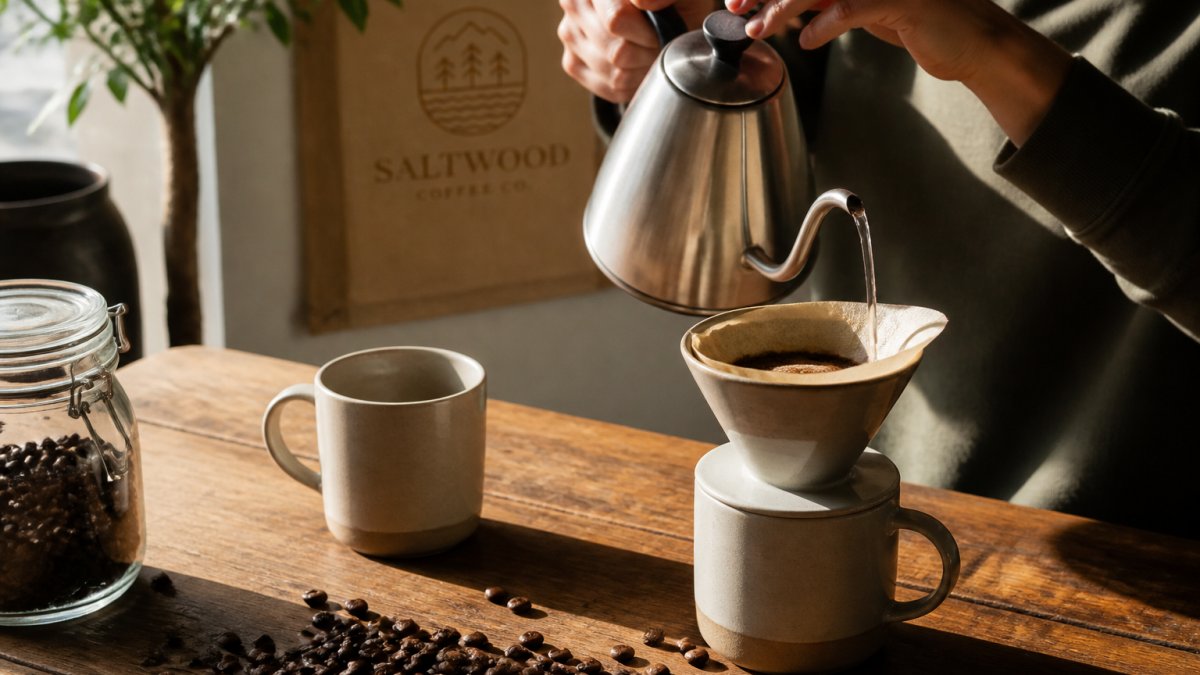
If you're using a drip machine, aim for a medium grind, similar to sand. If you're using a pour-over, medium-fine is ideal.
Grind immediately before brewing. The moment you grind, the clock starts on freshness. Within 15 minutes, you've lost noticeable brightness. Within an hour, the coffee tastes noticeably flatter.
Water Temperature and Brew Duration
Water temperature should be between 195 and 205 degrees Fahrenheit (90-96 Celsius). Boiling water (212°F) over-extracts and tastes bitter. Water that's too cool (below 190°F) under-extracts and tastes sour.
If you don't have a thermometer, let boiling water sit for 30 seconds before pouring. That's close enough for slow mornings.
Brew time depends on your method. Drip machines typically take 4-6 minutes. Pour-overs take 2.5-4 minutes. French press takes 4 minutes. The goal is to extract enough flavor without bitterness. If your coffee tastes sour, brew longer or use a finer grind. If it tastes bitter, brew shorter or use a coarser grind.
Common Mistakes to Avoid
The most common mistake is using old beans. Coffee that's been sitting in a bag for six months tastes flat no matter how carefully you brew it. Freshness is the foundation of a good cup.
The second mistake is grinding too fine. Over-extracted coffee tastes bitter and harsh. If you're new to grinding, start coarser than you think you need to.
The third mistake is rushing the ritual. Slow mornings are about the process, not the outcome. If you're standing over the coffee maker checking your phone, you're missing the point. The ritual is the value, not the caffeine.
| Step | Duration | Best Practice |
|---|---|---|
| Grind beans | 2 minutes | Use a burr grinder, grind just before brewing |
| Heat water | 3-5 minutes | Target 195-205°F, let boiling water cool 30 seconds |
| Brew | 2.5-6 minutes | Depends on method; adjust if taste is sour or bitter |
| Enjoy | 10-30 minutes | Don't rush; this is the point of slow mornings |
Quick Comparison: Which Bean Matches Your Ritual
Your slow morning is unique. Here's how to match the right bean to your style.
If you want simplicity and consistency, choose the Sunrise Breakfast Blend.

If you want smooth, approachable flavor, choose Brazil Santos. It tastes good at any temperature and never disappoints.
If you want bright, balanced sweetness, choose Costa Rica. It's complex enough to be interesting but balanced enough to be forgiving.
If you want silky, layered depth, choose Peru. It rewards lingering and reveals new notes as the cup cools.
If you want adventure and discovery, choose Ethiopia Natural, Nicaragua, or Tanzania.
The best coffee beans for slow mornings are fresh, balanced, and worth your time. At Saltwood Coffee, we roast single-origin beans and thoughtful blends specifically for this purpose: to deliver peak freshness, natural flavors, and the kind of balanced, deep profiles that reward contemplation. Specialty Coffee Association standards for roasting and freshness confirm that roast-to-order coffee maintains superior flavor compared to inventory-held beans.
Frequently Asked Questions
What makes certain coffee beans better for slow mornings than others?
Coffee suited to slow mornings balances smoothness, approachability, and flavor depth. Medium roasts work best because they preserve origin characteristics without the bitterness of dark roasts, while maintaining enough body to feel satisfying without intensity. Single-origin beans from regions like Brazil, Costa Rica, and Peru offer balanced acidity and natural sweetness that pair well with mindful brewing methods like pour-over or French press. The roast date matters too, fresh roasted coffee beans within one to six weeks of roasting deliver the clarity and aroma that make a ritual feel intentional.
Should I buy whole bean or pre-ground coffee for my morning routine?
Whole beans preserve freshness longer and allow you to grind just before brewing, which captures more aroma and flavor complexity. For a slow morning ritual, grinding whole beans becomes part of the intentional process itself. Pre-ground coffee loses volatile oils and flavor within days of grinding, so unless convenience is your priority, whole beans deliver noticeably better results in your drip coffee maker or pour-over. If you do choose pre-ground, use it within one to two weeks of purchase.
How long can I keep fresh roasted coffee beans before they go stale?
Fresh roasted coffee beans reach peak flavor between one and six weeks after roasting. Check the roast date on the bag, this is your reference point. During the first week, beans are still off-gassing and developing complexity. Weeks two through six offer the sweet spot for balanced flavor and aroma. After six weeks, the oils begin to oxidize and flavors flatten, though the coffee remains drinkable. Store beans in an airtight container away from direct light and heat. If you order roast-to-order, your coffee is roasted after you order and shipped the same day it's roasted, so you'll always be within the peak window.
What's the difference between light, medium, and dark roasts for morning coffee?
Light roasts preserve the most origin flavor and acidity, making them bright and tea-like. Medium roasts balance origin character with roasted sweetness and body, making them ideal for slow mornings because they're smooth without being flat. Dark roasts emphasize bitterness and body at the expense of nuance. For morning rituals, medium roasts offer the best combination: enough complexity to reward attention, enough smoothness to feel comforting, and enough body to feel substantial. Medium-light roasts like Ethiopia Natural work well if you prefer more fruity, floral notes.