

Table of Contents
- What Is Italian Roast Coffee?
- The Flavor Profile: What Italian Roast Coffee Tastes Like
- French Roast vs Italian Roast: Key Differences
- How to Brew Dark Roast Coffee for the Best Cup
- Freshly Roasted Coffee Benefits: Why Timing Matters
- Troubleshooting Bitter Brews and Storage Tips
- Frequently Asked Questions
Last Updated: September 27, 2026
What Is Italian Roast Coffee?
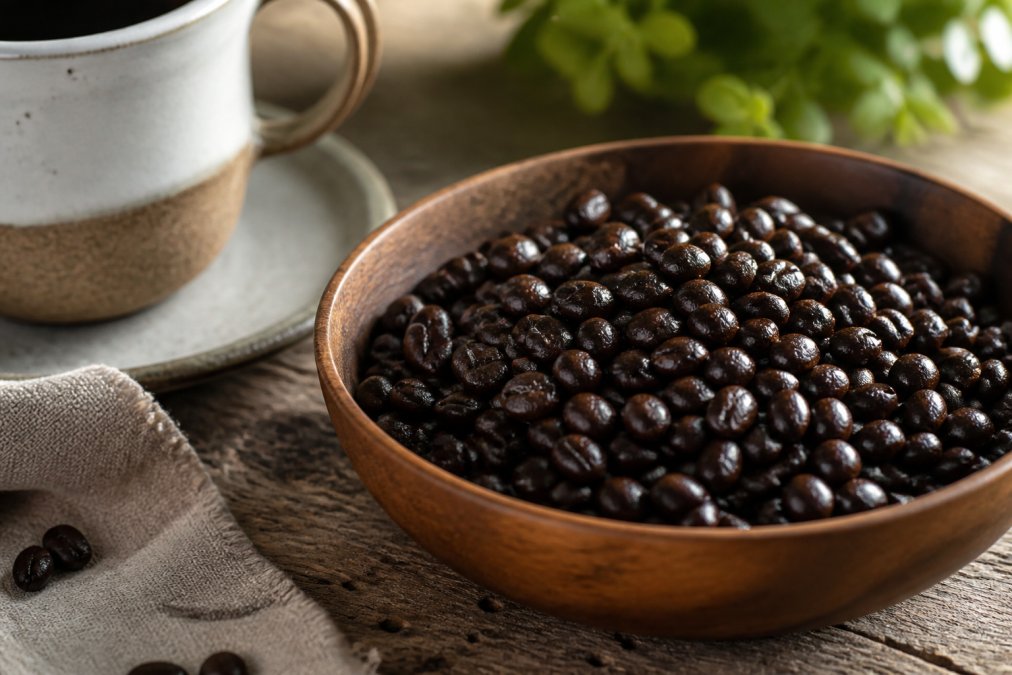
Italian roast coffee is a very dark roast style where beans are taken close to the edge of burning, producing a glossy, nearly black bean with a bold, bittersweet flavor. At Saltwood Coffee, we think of it as the roast that asks for your full attention. This guide covers what it tastes like, how to brew it, and why timing matters.
How the Roasting Process Creates Italian Roast
Roast level is decided by time and heat, not the bean itself. Any green coffee can be taken to Italian roast, though roasters usually pick beans with enough body to survive the trip.
The process moves through distinct stages:
- Drying: Beans lose moisture and turn from green to yellow.
- First crack: Built-up pressure makes the beans pop audibly.
- Caramelization: Sugars brown and the flavor turns deep and sweet.
- Second crack: Oils push to the surface and the bean darkens fast.
The Flavor Profile: What Italian Roast Coffee Tastes Like
Expect bold, bittersweet, and low in acidity. Italian roast coffee trades brightness for depth, and that trade is the whole point.
The dominant notes tend to be:
- Dark chocolate and cocoa
- Molasses and burnt sugar
- Toasted nuts and woodsmoke
- A lingering, slightly bitter finish
Acidity, Body, and Mouthfeel
Acidity falls sharply at this roast level. The compounds responsible for brightness break down under prolonged heat, so the cup reads smooth rather than sharp.
French Roast vs Italian Roast: Key Differences
Italian roast is darker than French roast, though the two sit close on the scale. Both are dark, oily, and past second crack, the gap is how far each one goes.
| Feature | French Roast | Italian Roast |
|---|---|---|
| Roast level | Dark | Very dark |
| Surface | Lightly oily | Heavily oily, glossy |
| Flavor | Smoky, bittersweet | Intense, charred, molasses |
| Acidity | Low | Very low |
| Body | Full | Very full, syrupy |
| Best for | Drip, French press | Espresso, moka pot |
How to Brew Dark Roast Coffee for the Best Cup
Brewing Italian roast well means adjusting for what the roast already did. The beans are brittle, highly soluble, and coated in surface oils, so a medium-roast recipe will over-extract them. The fix is a set of small, deliberate adjustments to grind, temperature, ratio, and water.
Total time: about 10 minutes Difficulty: Beginner
Start With Grind Size, Not Temperature
Most guides say to lower brew temperature first. That helps, but grind is the bigger lever. Italian roast shatters into fines more easily than a light roast because prolonged roasting weakens the bean's cell structure. Those fines clog the filter, slow the flow, and push extraction past the bitter threshold.
A practical starting point for pour-over and drip:
- Medium-coarse grind, roughly the texture of coarse sand or table salt, one to two steps coarser than your medium-roast setting.
- Espresso: a slightly coarser espresso grind than you would use for a medium roast, because the oils lubricate the puck and speed up flow.
- French press: a coarse grind, but expect more sediment than usual from the brittle beans.
- Moka pot: a fine-but-not-espresso grind, packed lightly, do not tamp.
Water Chemistry Matters More With Dark Roasts
This is the part most Italian roast guides skip. Dark, oily beans interact with water minerals differently than light roasts, and the wrong water can make an already bittersweet cup taste harsh or hollow.
- Aim for moderate mineral content. Water that is too hard (high in calcium and magnesium) amplifies the roast's bitter, ashy notes; water that is too soft tastes flat and lifeless, because there are not enough minerals to carry the roasted flavors.
- A common target range among specialty brewers is roughly 50-150 ppm total dissolved solids, with some magnesium for extraction and bicarbonate for buffering. A simple TDS meter and a taste test will tell you a lot.
- If your tap water tastes good on its own, it will usually brew decent coffee. If it tastes chlorinated, metallic, or flat, it will show up in the cup.
- Bottled or filtered water is a reasonable shortcut. Avoid distilled water on its own, it lacks the minerals that help extract flavor.
A Simple Pour-Over Method
- Heat water to 90-93°C (194-199°F). Boiling water scorches dark roast and pulls out ash. If you do not have a thermometer, let a kettle sit for 30-60 seconds after it boils.
- Use a 1:15 coffee-to-water ratio as a starting point, for example, 20 g of coffee to 300 g of water. Dark roasts extract fast, so you may prefer 1:16 if the cup tastes heavy.
- Rinse the filter with hot water, then add your grounds and level the bed.
- Bloom with about twice the coffee's weight in water (40 g for a 20 g dose). Wait 30-45 seconds. Italian roast releases a lot of CO2, so the bloom may look vigorous.
- Pour in two or three stages, letting the bed settle between pours. Keep the total brew time around 2:30-3:00 for a 300 g cup.
- Taste before you adjust. If it is bitter, go coarser. If it is weak or sour, go finer or slightly hotter.
Espresso and Moka Pot Notes
Italian roast is the traditional choice for espresso because it holds up to pressure and produces a thick, syrupy shot. Keep the shot short, a 1:1.5 to 1:2 ratio (18 g in, 27-36 g out) in about 25-30 seconds. A long pull turns bitter fast because the oils and roasted sugars extract so quickly.
The One Rule That Covers Most Cases
If your Italian roast tastes harsh, go one step coarser on the grind before you change anything else. Dark roasts extract faster than most people expect, and grind is the adjustment that fixes bitterness most reliably.
Freshly Roasted Coffee Benefits: Why Timing Matters
Freshly roasted coffee tastes better because the flavors are still intact and the beans have finished releasing gas. That window is real, and shorter than most bags suggest.
Troubleshooting Bitter Brews and Storage Tips
Bitterness is the most common complaint with Italian roast, and it is almost always a brewing problem, not a bean problem. The roast is bittersweet by design, so the goal is not to eliminate bitterness but to keep it balanced instead of harsh. Here is how to diagnose the cause instead of guessing.
A Diagnostic Approach to Bitter Brews
Work through these in order. Each one isolates a different variable, so you can tell what actually changed the cup.
| Symptom | Most Likely Cause | First Fix |
|---|---|---|
| Harsh, ashy taste | Water too hot or too hard | Drop to 90-93°C, try filtered water |
| Dry, bitter finish | Over-extraction from fines | Go one step coarser |
| Sour and bitter at once | Uneven grind | Recalibrate grinder, sift fines |
| Flat, lifeless cup | Stale beans | Check roast date, buy fresher |
| Weak but bitter | Ratio too wide | Tighten to 1:14 or 1:13 |
Storage: What Actually Matters for Dark Roast
Italian roast fades faster than lighter roasts because the surface oils oxidize quickly. The goal is to slow that oxidation without introducing moisture or odors.
- Keep beans whole until brewing. Grinding exposes far more surface area to oxygen, and dark roast oils go stale within days once ground.
- Use an airtight, opaque container. Light and heat accelerate staling. A ceramic or stainless steel canister with a tight seal works well; one-way valve bags are fine short-term if you squeeze out excess air.
- Skip the fridge. Condensation forms every time you open the container, and coffee absorbs fridge odors. The freezer works only if you portion beans into airtight bags and do not thaw and refreeze repeatedly.
- Buy in amounts you will finish in two to three weeks. For most home brewers, that is 250-500 g at a time. Smaller, more frequent orders beat a large bag that fades on the shelf.
- Note the roast date, not the best-by date. A best-by date tells you nothing about freshness; a roast date tells you exactly where you stand.
A Simple Rule
Buy fresh, store cool and dark, and drink it before the oils go flat. If your Italian roast tastes harsh, fix the water and grind before you blame the beans, the roast is doing its job, and the brewing is usually where the bitterness comes from.
Frequently Asked Questions
What is an Italian roast coffee?
Italian roast coffee is a very dark roast style where beans are roasted until they reach a deep, nearly black color with an oily surface. This roasting level produces a bittersweet, full-bodied cup with low acidity and smoky-sweet notes. The intense heat caramelizes the bean sugars, creating a syrupy mouthfeel and lingering finish. It is traditionally used for espresso in Southern Italian coffee culture, though it works well in many brewing methods.
What is the difference between French roast and Italian roast coffees?
French roast and Italian roast are both dark roasts, but Italian roast is taken further. French roast beans are dark brown with a slightly oily surface and offer a bittersweet, smoky flavor. Italian roast beans are nearly black, heavily oiled, and deliver a more intense, smoky-sweet profile with lower acidity and a heavier body. The roasting profile for Italian roast pushes the beans closer to the edge of carbonization, resulting in stronger bitterness and a more pronounced lingering finish.
How should you brew Italian roast coffee for the best results?
Italian roast coffee works best with brewing methods that highlight its full-bodied character. Use water between 90-93°C (194-199°F) and a slightly coarser grind than you would for a medium roast to avoid over-extraction. Espresso, French press, and moka pot are excellent choices. Adjust your grind size finer if the cup tastes weak, or coarser if it turns bitter. Freshly roasted beans within one to six weeks of the roast date deliver the best flavor.
Is Italian roast coffee stronger than other roasts?
Italian roast coffee tastes stronger because of its intense, smoky-sweet flavor and heavy body, but it actually contains slightly less caffeine than lighter roasts. The extended roasting process burns off some caffeine. What you perceive as strength comes from the bold flavor intensity, low acidity, and syrupy mouthfeel. If you want a powerful-tasting cup without extra caffeine, Italian roast is an excellent choice for your morning ritual.