

Table of Contents
- Why Specialty Coffee Belongs in Your Home Office
- What Separates Specialty Coffee From Grocery Store Beans
- Quick Comparison: Best Office Coffee Beans at a Glance
- How We Evaluated These Beans
-
The Best Single-Origin Coffee for Home Offices
- Match the bean to your brewer
- Colombia: Bright and Complex for All-Day Brewing
- Ethiopia Natural: Fruity and Floral for Slow Mornings
- Guatemala: Dark Chocolate and Butterscotch Depth
- Tanzania: Floral and Bright for Pour-Over Fans
- Brazil Santos: Smooth Cocoa Notes for Drip Brewers
- Peru: Silky Sweetness for Milk-Based Drinks
- Whole Bean vs. Ground Coffee: What Works Best at Home
- Coffee Subscriptions Worth the Money for Remote Workers
- Cost Per Cup: What a Home Office Coffee Budget Really Looks Like
- Storage and Freshness: Keeping Beans at Their Peak
- Frequently Asked Questions
Last Updated: October 16, 2026
Why Specialty Coffee Belongs in Your Home Office
Specialty coffee scores 80 or above on the Specialty Coffee Association's 100-point scale, graded for defects, traceability, and cup quality.
That freshness gap is bigger than most people realise. Grocery store coffee sits in a warehouse, then a distribution centre, then a shelf.
Below, we break down the best specialty coffee for home offices, how to pick beans by brew method, and what a realistic cost per cup looks like.
What Separates Specialty Coffee From Grocery Store Beans
The difference comes down to three things: grade, roast date, and traceability.
Grocery beans are typically commodity-grade, blended for consistency rather than character, and roasted in large batches with no printed roast date. The Specialty Coffee Association's grading standards define that score and how it is measured.
Flavour follows from there. A single-origin Colombian and a mass-market "medium roast" can look identical in the bag.
Quick Comparison: Best Office Coffee Beans at a Glance
| Coffee | Roast Level | Tasting Notes | Best Brew Method | Price |
|---|---|---|---|---|
| Colombia | Medium | Dried orange, berry, chocolate | Any method | $24.99 |
| Ethiopia Natural | Medium-light | Milk chocolate, fruity, caramel | Pour-over, French press | $24.99 |
| Guatemala | Medium | Dark chocolate, bright fruit, butterscotch | Drip, pour-over | $24.99 |
| Tanzania | Medium-light | Pear, floral, jasmine, strawberry | Pour-over | $24.99 |
| Brazil Santos | Medium | Cocoa, smooth, elegant | Drip | $24.99 |
| Peru | Medium | Salted caramel, silky sweet, citrus | Espresso, milk drinks | $24.99 |
Every bag above is a single origin roasted to order. The right pick depends on your brewer and how you take your coffee, not on which one sounds fanciest.

How We Evaluated These Beans
We judged each coffee on five criteria: roast level, flavour clarity, forgiveness across brew methods, freshness at delivery, and cost per cup.
Roast level matters because it determines how easy the bean is to brew well. Flavour clarity is next, does the coffee taste like its stated notes, or like generic "coffee"? Finally, we weighed whether a bean works across more than one brewer, since most home offices have a drip machine and maybe a French press.
The Best Single-Origin Coffee for Home Offices
Single-origin coffee is sourced from one region, farm, or cooperative rather than blended from multiple countries.
Here are the six we recommend, matched to the brewer and skill level most home offices actually have.
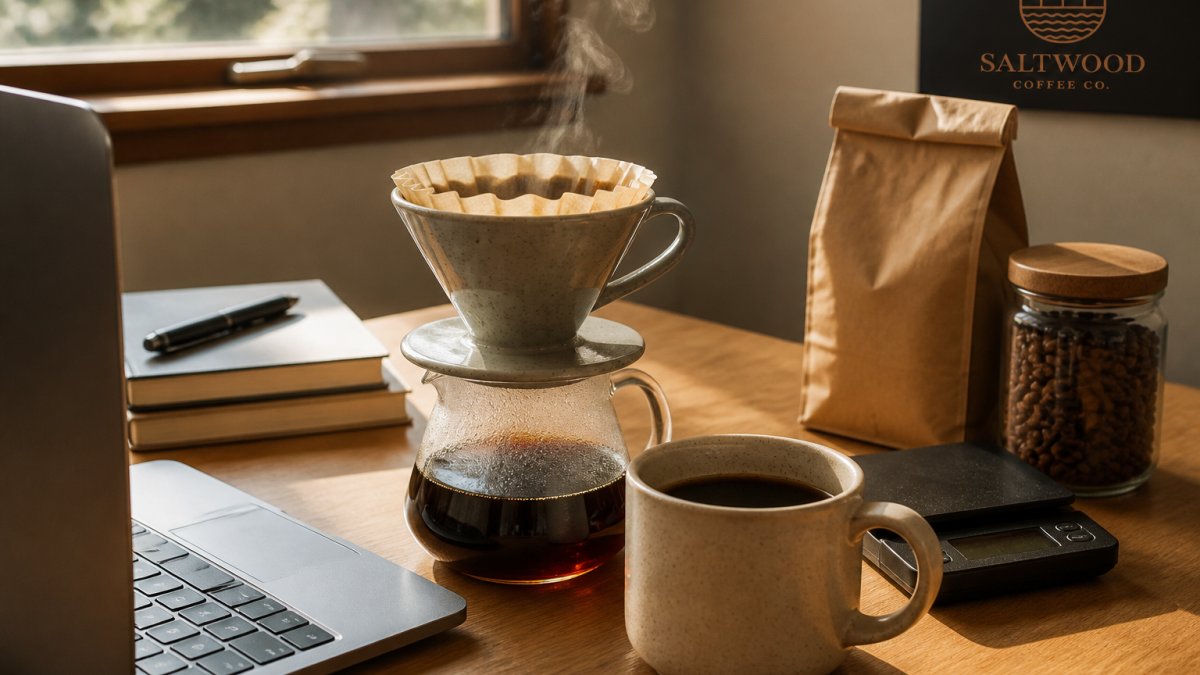
Match the bean to your brewer
| Brewer | Skill level | Best pick | Why it fits |
|---|---|---|---|
| Drip machine | Beginner | Brazil Santos | Forgiving of fixed temperature and coarse grind; clean cocoa cup |
| Drip machine | Beginner | Guatemala | More depth than a standard breakfast blend; works with milk |
| Pour-over (V60, Chemex) | Intermediate | Tanzania | Delicate florals and pear show best with controlled temperature |
| Pour-over | Intermediate | Ethiopia Natural | Sweet, fruity cup rewards a slower, measured brew |
| French press | Beginner | Ethiopia Natural | Full immersion suits its round, sweet profile |
| French press | Beginner | Colombia | Works across every method; berry and chocolate balance |
| Espresso | Advanced | Peru | Silky caramel sweetness holds up to milk |
| Espresso | Advanced | Colombia | Chocolate base gives enough body for a straight shot |
Colombia: Bright and Complex for All-Day Brewing
Our top pick for most home offices. Colombia is a medium roast with dried orange, berry, and chocolate notes, grown by smallholder farmers in Medellín and fully washed in solar dryers.

The berry note keeps it interesting without tipping into sourness, and the chocolate base gives it enough body to drink black all morning. If you want one bag that covers every brewer in the house, start here.
Ethiopia Natural: Fruity and Floral for Slow Mornings
Ethiopia Natural is a medium-light roast with milk chocolate, fruity, and caramel notes from heirloom cultivars in the Sidama zone. The natural process, where the fruit dries onto the bean, gives a rounder, sweeter cup than a washed Ethiopian.
This is the coffee for a slower start, rewarding a pour-over or French press and a few extra minutes.
Guatemala: Dark Chocolate and Butterscotch Depth
Guatemala brings dark chocolate, bright fruit, and butterscotch from smallholder farms in Antigua. It is a medium roast with more depth than Colombia and less acidity.
That makes it a strong all-rounder for drip brewers who want something richer than a standard breakfast blend without going dark. The butterscotch note carries through milk well, so it works for lattes too.
Tanzania: Floral and Bright for Pour-Over Fans
Tanzania is a medium-light roast with pear, floral, jasmine, and strawberry notes from the Mbeya region. It is the most delicate coffee here, and it shows best in a pour-over where you control water temperature and brew time.
If you already own a gooseneck kettle and a V60, this is the bag to buy; if your only brewer is a fixed-temperature drip machine, pick Guatemala instead.
Brazil Santos: Smooth Cocoa Notes for Drip Brewers
Brazil Santos is a medium roast with an elegant, smooth cup and cocoa notes, grown in Paraná and São Paulo. It is the least demanding coffee here, which is exactly the point.
Drip machines are unforgiving, and Brazil Santos does not punish you for it: set it and forget it, and you still get a clean, chocolatey cup.
Peru: Silky Sweetness for Milk-Based Drinks
Peru is a medium roast with salted caramel, silky sweet, and citrus notes from the Piura and Amazonas regions. It holds up to milk better than anything else here.
If your daily cup is a flat white or a latte, Peru is the pick. The caramel sweetness survives the milk, and the citrus keeps it from tasting flat.
Whole Bean vs. Ground Coffee: What Works Best at Home
Whole bean coffee stays fresh far longer than pre-ground, because grinding exposes the oils and aromas to oxygen.
Ground coffee is not a bad choice, just a shorter window: buy it in smaller amounts, keep it sealed, and use it within a couple of weeks.
The practical rule: buy whole bean if you brew daily and own a grinder. Buy ground if you brew occasionally or want to skip the extra step.
Coffee Subscriptions Worth the Money for Remote Workers
A coffee subscription is a recurring delivery of freshly roasted beans, usually at a set interval and often at a small discount. For remote workers, the value is not the discount but the timing: it arrives before you run out, so you are never stuck brewing stale beans or making a mid-week grocery run.
But most subscription advice stops there. What actually determines whether a subscription works for a home office is the cadence math, and almost nobody does it.
Do the cadence math before you subscribe
Start with your daily dose. A standard double shot or a 12-ounce drip cup uses roughly 18 grams, so two cups a day is about 36 grams.
That single calculation tells you which interval to pick:
- One cup a day, 12 oz bag: roughly a bag every three weeks. A monthly delivery leaves a gap; a two-week delivery builds a backlog.
- Two cups a day, 12 oz bag: roughly a bag every nine to ten days. A two-week interval is close; a monthly interval will run dry in the first week.
- Two cups a day, 2 lb bag: roughly a bag every three to four weeks. A monthly interval fits almost exactly.
The most common subscription mistake is choosing an interval that is too long. If you drink two cups a day, a monthly 12-ounce bag runs out in the first week, and you end up buying grocery coffee to fill the gap.
Match the subscription type to how you actually drink
Subscriptions come in three broad shapes, each suiting a different home-office pattern:
- Fixed single-origin or blend: the same coffee every delivery. Best if you have one daily cup you love and do not want to think about it, predictable, easy to dial in, and the cheapest way to keep a favorite on hand.
- Rotating selection: a different origin each cycle. Best if you enjoy variety and brew methods that show off different profiles, such as pour-over or French press. Less predictable, so it suits drinkers happy to adjust grind and dose.
- Capsule subscription: pods delivered on a schedule. Best for speed between meetings and no cleanup. Costs more per cup than whole bean, but removes the grinder and the mess.
If you drink mostly milk drinks, a rotating selection can be frustrating because the milk masks the differences you paid for. A fixed medium roast with caramel or chocolate notes will serve you better.
Decaf and lower-caffeine options belong in the plan
Most subscription guides ignore the afternoon cup, which is exactly when caffeine sensitivity matters.
Specialty decaf has improved considerably. Look for beans labeled Swiss Water Process or CO2 Process, which remove caffeine without the solvent residues of older methods.
To reduce caffeine without going fully decaf, try a half-caf blend: mix regular beans with decaf at a 50/50 ratio in the hopper or grinder.
Bag size and freshness for solo drinkers
A subscription is only worth it if the beans arrive fresh and get used before they fade. The peak window for most roasted coffee runs from about one to six weeks after the roast date.
For a solo drinker at one or two cups a day, a 12-ounce bag on a two- to three-week cadence usually beats a 2-pound bag on a monthly cadence, because you open a fresh bag more often.
Cost Per Cup: What a Home Office Coffee Budget Really Looks Like
Cost per cup is the number that actually matters, and it is usually lower than people expect for specialty coffee.
A $24.99 bag of whole beans makes roughly 30 to 35 cups at a standard 18-gram dose, well under a dollar per cup, before milk.
| Setup | Beans | Cost Per Cup | Notes |
|---|---|---|---|
| Drip machine | Brazil Santos | Under $1 | Cheapest per cup, most forgiving |
| Pour-over | Tanzania | Under $1 | More hands-on, best flavour clarity |
| Espresso | Peru | Under $1 | Needs a grinder and a machine |
| Single-serve capsules | Original Roast capsules | Higher per cup | Convenience trade-off |
The capsule format costs more per cup than whole bean, but it removes the grinder and the cleanup.

Storage and Freshness: Keeping Beans at Their Peak
Freshness is the whole reason to buy specialty coffee, and storage is where most people undo it.
Keep beans in an airtight, opaque container at room temperature, away from light and heat. Do not store them in the fridge, where moisture and odours get in.
The peak freshness window for most roasted coffee runs from about one to six weeks after the roast date.
Frequently Asked Questions
What is the best coffee brand for a home office?
The best specialty coffee for home offices comes from roasters that prioritize freshness and transparency. Saltwood Coffee roasts to order and ships the same day it's roasted, so beans arrive within days of roasting rather than weeks. Their single-origin options like Colombia and Guatemala offer balanced flavor profiles suited to all-day brewing, while the Medium Blend provides a reliable everyday cup. Look for a visible roast date and whole beans for the best results.
Should I choose whole bean or pre-ground coffee for my home office?
Whole bean coffee stays fresh longer because the oils and aromatics remain protected inside the bean. Once ground, coffee begins losing flavor within hours. For a home office, whole beans paired with a burr grinder give you the flexibility to adjust grind size for different brew methods, whether that is drip, pour-over, or French press. If convenience matters more, buy pre-ground in smaller quantities and use it within two weeks.
Is specialty coffee worth the extra cost for everyday drinking?
At $24.99 per bag, specialty coffee costs more per bag than grocery store options, but the cost per cup is well under a dollar before milk. That is comparable to or less than a cafe visit. The difference is noticeable in flavor: specialty beans have clearer tasting notes and a more balanced body. For remote workers drinking one or two cups daily, the upgrade is a small daily investment.
How do I keep coffee beans fresh after opening the bag?
Store whole beans in an airtight container away from light, heat, and moisture. A opaque canister kept in a cool cupboard works well. Avoid the refrigerator because condensation damages the beans, and skip the freezer unless you are storing a large quantity for more than a month. Buy amounts you will finish within two to four weeks, or set up a recurring delivery so you always have freshly roasted coffee on hand.
How much caffeine is in a cup of specialty coffee?
An 8-ounce cup of drip coffee typically contains 95 to 165 milligrams of caffeine, depending on the bean, roast level, and brew strength. For a workday, most adults can comfortably have up to 400 milligrams daily. If you are sensitive to caffeine or brewing later in the afternoon, try a lower-caffeine option or switch to a smaller cup size after lunch.
The hardest part of a home office coffee setup is not the brewer or the grinder. It is keeping fresh beans in the cupboard without a mid-week grocery run. Saltwood Coffee roasts to order, ships the same day it's roasted, and holds no standing inventory, so the bag that arrives is the bag that was roasted that morning. Choose a single origin like Colombia for all-day brewing, or Peru if your daily cup takes milk. Start the Ritual and see what your morning tastes like when the beans are actually fresh.